
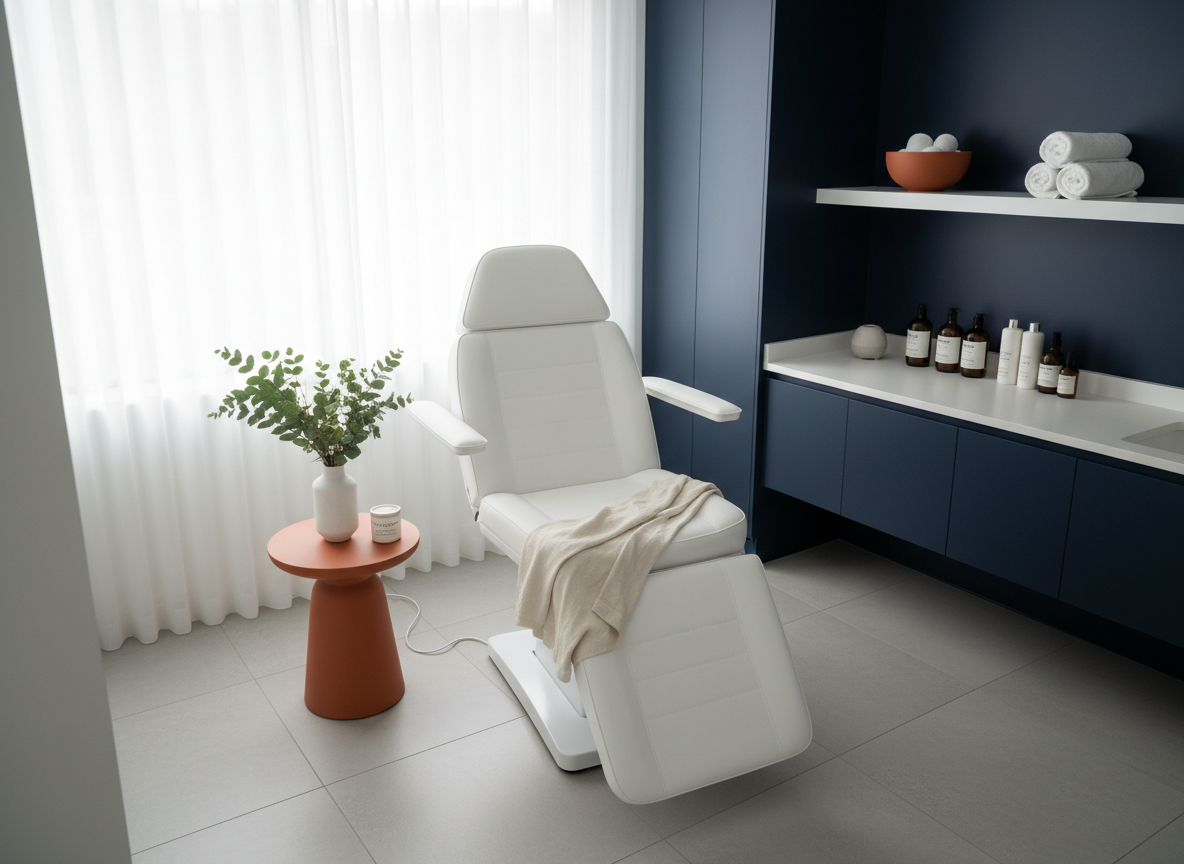
The med spa industry is growing faster than almost any other local service category — the U.S. market is now valued at roughly $21.4 billion and has expanded about 64% since 2018. But growth doesn’t mean easy. Roughly 60% of new med spas fail within their first 18 months, and it’s rarely the treatments that fail — it’s the marketing.
Med spa owners ask me some version of the same handful of questions, whether they’re opening their first location or trying to fill a slow Tuesday afternoon. Below are the ones I hear most, answered with the current 2026 data — plus the playbook I actually use with clients to turn that data into booked consultations.
1. How much should a med spa actually spend on marketing?
The industry benchmark is 7–10% of gross revenue for a med spa in steady, sustainable growth mode. Below 5% typically only maintains what you already have; 10–15% is for a location actively trying to scale; anything above 15% should really only apply to a brand-new opening. In dollar terms, that generally shakes out to:
- Solo practice ($25K–$60K/month revenue): roughly $1,750–$6,000/month, with most owners starting around $2,500–$3,500/month.
- Multi-room clinic ($60K–$200K/month revenue): roughly $4,200–$20,000/month.
- Multi-location ($200K+/month revenue): $14,000–$40,000+/month.
A common allocation split is about 50% paid ads (Google and Meta), 20% content and SEO, 15% retention and email, 10% creative production, and 5% held back for testing new offers or channels.
2. What’s the best marketing channel for a med spa — SEO, paid ads, or social?
There isn’t one “best” channel, but there is a clear order of operations. 72% of aesthetic patients research treatments online before ever booking, and 62% of med spa leads now come from mobile devices — which puts local SEO and a fast, mobile-friendly Google Business Profile at the foundation of everything else you do. From there, 73% of med spas run social ads as a primary paid channel, with cost-per-lead on Meta typically landing between $18 and $42, and cost per booked consultation between $65 and $180. Video ads consistently outperform static images by 2.5–3.8x on conversion rate, so if you’re only running photo carousels, that’s usually the first thing I’d fix.
The channel that gets ignored the most is speed of follow-up, not the ad itself: practices that respond to a new lead within 5 minutes are roughly 21x more likely to convert it into a booked appointment than those that wait even an hour.
3. How much do Google reviews really matter for a med spa?
More than most owners assume. 81% of patients check Google reviews before choosing a provider, and locations with 100+ reviews get roughly 3.2x more clicks from local search results than those with a thin review profile. A well-optimized Google Business Profile for an active med spa typically pulls 1,200–3,400 views a month — which means an under-reviewed profile isn’t just losing trust, it’s losing visibility Google would otherwise be giving you for free.
Before-and-after photos matter almost as much: 68% of prospective patients cite them as the single most influential factor in choosing where to book, which is exactly why professional, consistent photography of real results (not stock imagery) tends to outperform almost any other content you can post.
4. Which treatments should I actually be promoting?
Follow the revenue, not just the buzz. Injectables (Botox and hyaluronic acid fillers) still account for 45–55% of total med spa revenue, with Botox remaining the single most-performed non-surgical treatment worldwide. But the fastest growth right now is happening around the edges: body contouring is up 22% year-over-year, microneedling is up 34% since 2022, and 38% of U.S. med spas now offer GLP-1 weight-loss treatments as a service line. Preventative Botox among patients under 30 has grown 40% in three years — a demographic shift worth building a campaign around on its own, rather than folding it into general injectable messaging.
5. How do I attract a younger patient base?
This is the fastest-growing segment in the industry: patients aged 25–34 are up 28% since 2022, driven largely by the preventative-Botox trend among patients under 30. This audience discovers providers differently than the 35–54 core demographic — they lean more heavily on Instagram and TikTok before-and-afters, peer reviews, and influencer or user-generated content than on traditional search ads alone. If your content calendar is built entirely around the 35+ patient, you’re likely leaving this growth segment for a competitor to capture.
6. Do membership or loyalty programs actually work?
Yes — and not just for retention. 65% of med spa clients are repeat customers, and average patient lifetime value ranges from $1,800 to $5,200 over just 12 months, which is the real financial argument for building a membership tier rather than only ever selling one-off treatments. A well-structured program does double duty: it protects revenue during slow months, and it can become a genuine lead-generation engine on its own when existing members are incentivized to refer friends and family — still the primary referral source for 47% of first-time patients.
7. Why do so many med spas fail, and how does marketing prevent it?
Roughly 60% of new med spas fail within 18 months, and it’s almost never a clinical problem — it’s an empty appointment book. The pattern I see most often is a location that spent heavily to open, then treated marketing as a one-time launch expense instead of an ongoing cost of doing business. The med spas that survive past year one are the ones running consistent local SEO, review generation, and retention marketing every month — not just a burst of ads around the grand opening.
The Playbook: 5 Things to Do Before Your Next Marketing Dollar
- Audit and claim your Google Business Profile first. Before you spend on ads, make sure your profile is complete, categorized correctly, and actively collecting reviews — it’s the highest-leverage, lowest-cost asset you have.
- Build a review-generation habit, not a review campaign. Ask every satisfied patient at checkout, automate a follow-up text or email, and aim to consistently cross the 100-review threshold where click-through rates jump.
- Invest in real before-and-after photography. With 68% of patients citing these images as their top decision factor, professional photos of your actual results outperform stock imagery and generic stock video every time.
- Segment your campaigns by treatment and by age group. A 24-year-old considering preventative Botox and a 52-year-old considering a body-contouring package respond to completely different messaging — don’t run one generic ad set for both.
- Set a lead-response SLA and hold your front desk to it. With a 21x difference in conversion between a 5-minute and a 1-hour response, this single operational fix often outperforms an increased ad budget.
Ready to turn these stats into booked consultations at your med spa?

About the Author
Melissa is the Founder and Lead Strategist at Visionary Search, based in Dallas, Texas. With 20+ years of experience in digital acquisition marketing, she helps local and hospitality businesses — including med spas — turn Google Ads, Local SEO, and Local Service Ads into a steady stream of booked appointments, backed by professional photography that actually converts.
Connect with her today for a free review of your med spa’s marketing.

Leave a Reply